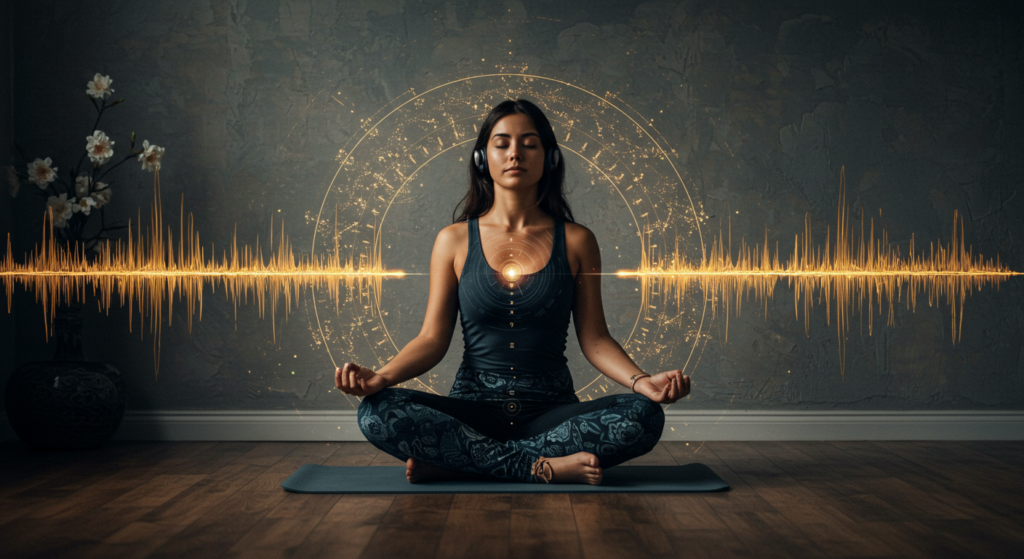
Scroll through meditation apps or YouTube channels, and you’ll likely encounter tracks featuring specific sound frequencies: binaural beats, isochronic tones, Solfeggio frequencies, and more. These sounds are increasingly popular as aids for relaxation, focus, sleep, and deepening meditation. But what are they, and can they really influence your brainwaves and mental state?
Let’s explore the world of meditative sound frequencies.
What Are These Sounds?
- Binaural Beats: This technique requires headphones. Two tones with slightly different frequencies are played simultaneously, one in each ear (e.g., 200 Hz in the left, 210 Hz in the right). Your brain perceives the difference between these two frequencies as a third, rhythmic beat (in this example, 10 Hz).
- Isochronic Tones: These are regular, rhythmic pulses of a single tone turning on and off. Unlike binaural beats, headphones aren’t strictly necessary as the effect is created by the pulsing rhythm itself.
- Solfeggio Frequencies: These are specific tones (e.g., 174 Hz, 417 Hz, 528 Hz, 963 Hz) derived from an ancient musical scale. They are often associated with specific spiritual or healing properties (“DNA repair,” “connecting to source”), though these claims largely stem from historical and esoteric traditions rather than robust scientific validation.
The Theory: Brainwave Entrainment
The underlying idea behind binaural beats and isochronic tones is “brainwave entrainment.” This theory suggests that the brain’s own electrical activity (brainwaves) can naturally synchronize with the rhythm of external stimuli, like these specific sound frequencies. Different brainwave patterns are associated with different mental states:
- Delta (0.5-4 Hz): Associated with deep, dreamless sleep.
- Theta (4-8 Hz): Linked to deep meditation, REM sleep, intuition, creativity.
- Alpha (8-13 Hz): The state of relaxed awareness, light meditation, calm focus. Often the target for mindfulness tracks.
- Beta (13-30 Hz): Normal waking consciousness, active thinking, focus, alertness.
- Gamma (30+ Hz): Associated with high-level information processing, peak awareness, insight.
By listening to sounds pulsing at, say, an Alpha frequency (like 10 Hz), the hope is that your brainwaves will start to align with that frequency, promoting a state of relaxed alertness conducive to meditation.
Do They Actually Work? A Balanced View
Many people report finding these sounds incredibly relaxing, helpful for blocking out distractions, and useful for getting into a meditative state faster.
However, it’s important to maintain a balanced perspective:
- Scientific Evidence: While some studies show potential effects of binaural beats on anxiety, focus, and sleep, the research is still evolving and sometimes mixed. Evidence for the specific, extraordinary claims associated with Solfeggio frequencies is largely anecdotal or based on spiritual belief systems, lacking strong scientific backing.
- Placebo Effect & Relaxation Response: Simply taking time to sit quietly and listen to any calming sound can trigger a relaxation response. The belief that a sound will help can also contribute significantly to the experienced effect (the placebo effect).
- Individual Variation: People respond differently. Some find the sounds irritating, while others find them profoundly helpful.
Tips for Exploring:
- Use Headphones: Essential for binaural beats to work.
- Find Reputable Sources: Look for quality recordings on apps (like Insight Timer, Calm) or dedicated channels.
- Experiment: Try different frequencies (Alpha or Theta are common starting points for meditation) and see how they feel to you.
- Don’t Expect Miracles: Approach them as a potential tool or aid, not a magic button.
- Combine with Practice: Use them to support your existing mindfulness or meditation techniques, not replace them entirely.
Sound frequencies can be a fascinating and potentially supportive addition to your mindfulness toolkit. Approach them with curiosity, pay attention to your own experience, and focus on what genuinely helps you cultivate inner peace.
(Disclaimer: These sounds are not a substitute for medical treatment. Consult a healthcare professional for any health concerns.)
Have you experimented with frequency sounds for meditation or relaxation? What have your experiences been like? Share in the comments!